
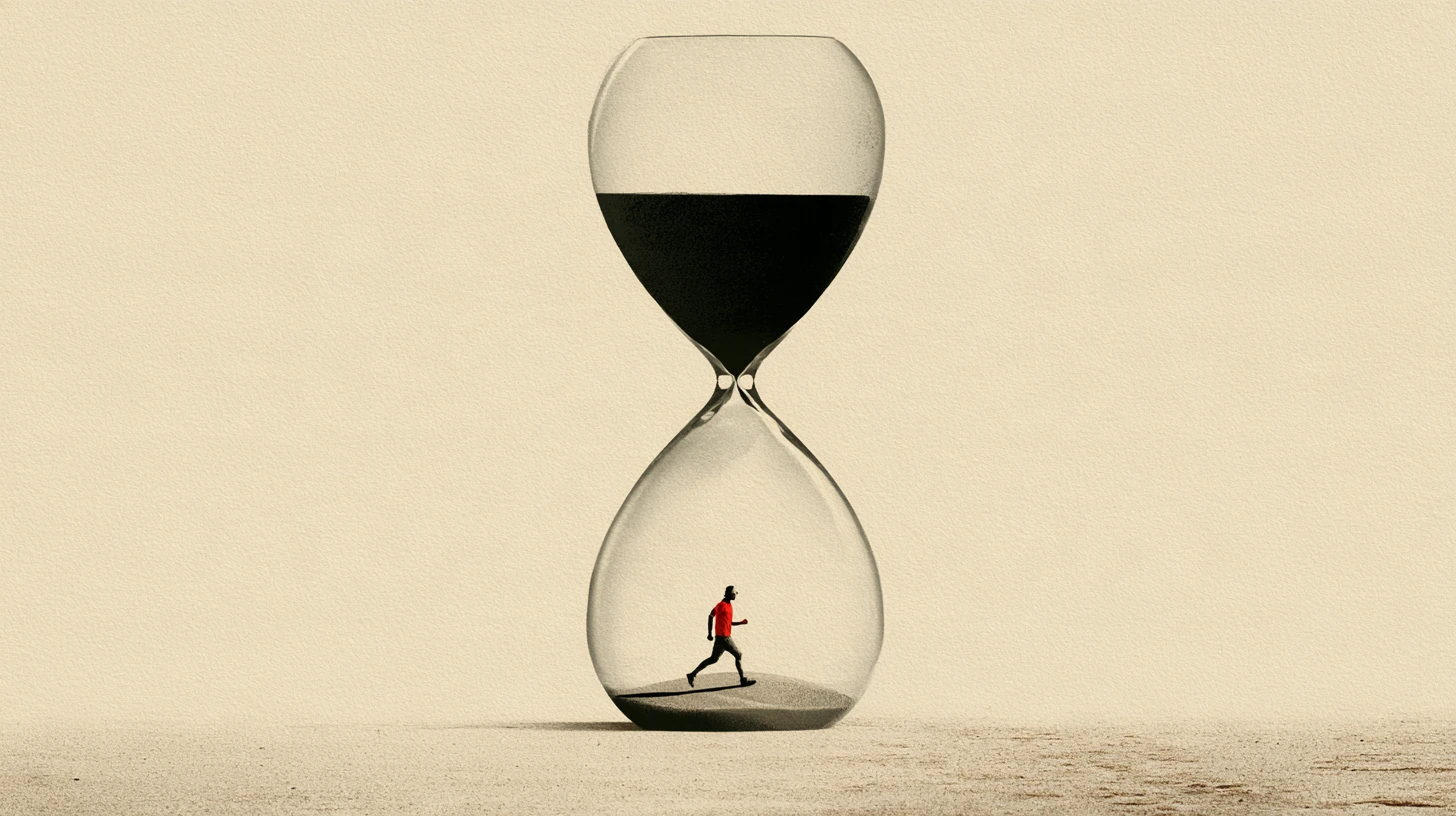
“Healthspan” is an efficient word. It takes a complicated question—how much of a life is spent in good health—and makes it sound like something a person could improve, perhaps even track. That compression explains its appeal. It also creates an opening for products to borrow the authority of a scientific question without proving they can answer it.
The term belongs to a discussion that long predates its consumer appeal. Researchers and public-health agencies distinguish the length of life from the health experienced during it. Now the same word appears in the language of gyms, clinics, supplements and apps. Its meaning has not necessarily changed; its audience and the expectations attached to it have. To understand the obsession, it helps to follow what happened when a population-level concern became a personal purchasing goal.
A word for the missing years
“Lifespan” is comparatively easy to grasp: people live a certain number of years. “Healthspan” asks about the condition of those years. The World Health Organization uses a formal population measure, healthy life expectancy at birth, or HALE, to estimate average years lived in “full health.” It does not assign each individual a fixed number of healthy birthdays, and “full health” is not a judgment about the value of a life with disability or illness. It is a way to put the burden of less-than-full health beside mortality in a population measure.
That distinction matters because a rising life-expectancy figure can be read too generously. Final figures from the CDC’s National Center for Health Statistics put U.S. life expectancy at birth at 77.5 years in 2022, 78.4 in 2023 and 79.0 in 2024. These are period estimates for the U.S. population, not predictions for a reader. They tell us about mortality in those data years, not how many of the additional years are lived in good health. On a global scale, WHO reports life expectancy of 73.3 years in 2023. That is a different population, not a benchmark to subtract from the U.S. figure.
The scientific concern is not merely that people want to feel better as they age. In a December 2024 JAMA Network Open paper, Garmany and Terzic examined healthspan-lifespan gaps across 183 WHO member states. Their cross-sectional study found that gains in length of life had not been matched by equivalent gains in healthy longevity. The finding gives the term a reason to exist: surviving longer and remaining healthy for longer are related, but they are not identical outcomes.
When an observation becomes an offer
The study is a description of populations, not a shopping guide. Cross-sectional research can identify a gap in the measures it compares; it cannot establish that a particular test, supplement or clinic service will narrow that gap for an individual. Nor does the paper turn healthspan into a number someone can read from a wearable and then optimize by next month. Its time horizon and unit of analysis are different from the ones used in a consumer pitch.
Yet the word travels well in marketing precisely because it sits between a concrete fear and a hopeful promise. Someone may reasonably want years in which ordinary activities remain possible. A company can then present a measurement, routine or product as a way to protect those years. The first proposition is understandable; the second needs evidence about outcomes. A marker that changes over a few weeks is not, by itself, evidence of healthier years decades later.
Supplement use shows how easy it is to mistake participation for proof. In CDC National Health and Nutrition Examination Survey data collected from August 2021 through August 2023, 23.4% of U.S. adults ages 20–39 took two or more dietary supplements, compared with 56.4% of adults 60 and older. A separate CDC analysis of 2017–2018 data found that 57.6% of adults age 20 and over had used any dietary supplement in the preceding 30 days. Those surveys measure reported use in different periods and categories. They do not test whether taking supplements extends healthy life.
The numbers also cannot tell us why any respondent took a product. Some may have been following clinical advice; others may have been pursuing a general sense of prevention. Treating the percentages as evidence of a single cultural motive would invent a finding the surveys do not contain. What they do show is a large audience for health-related products, particularly among older adults in the multi-supplement measure. That makes the question of evidence commercially consequential, not merely semantic.
The same test applies to the broader longevity marketplace. A clinic may offer extensive testing; an app may translate data into a score. Neither description establishes that the service changes a person’s eventual healthy-life expectancy. A test might be useful for a specific clinical purpose while a sweeping claim about “extending healthspan” remains unproven. The relevant question is not whether the language sounds scientific, but what outcome was measured, in whom, and over how long.
Keep the timescales separate
The healthspan idea is valuable because it resists a shallow success story built on years alive alone. It directs attention to function and disease burden as well as survival. But it becomes less useful when it is treated as a quick personal score or as a promised return on a purchase. Population estimates describe what has happened across many lives; claims about an intervention require evidence that the intervention changes the outcome it advertises.
This is the honest tension inside the trend. The research is concerned with risks and health accumulated over long periods. The market is better at selling an action someone can take now. Those two timescales need not be enemies, but they should not be confused. Before buying a product or service on a healthspan promise, ask what evidence links it to years lived in better health—not just to a more interesting dashboard or a reassuring short-term number.